Moroccan Cooking Class in Marrakech
Learn how to prepare traditional Moroccan dishes with a local chef in Marrakech. A hands-on 3-hour class covering tagine, salads and mint tea.
3 hours
2-12 people
From
View Details
€45
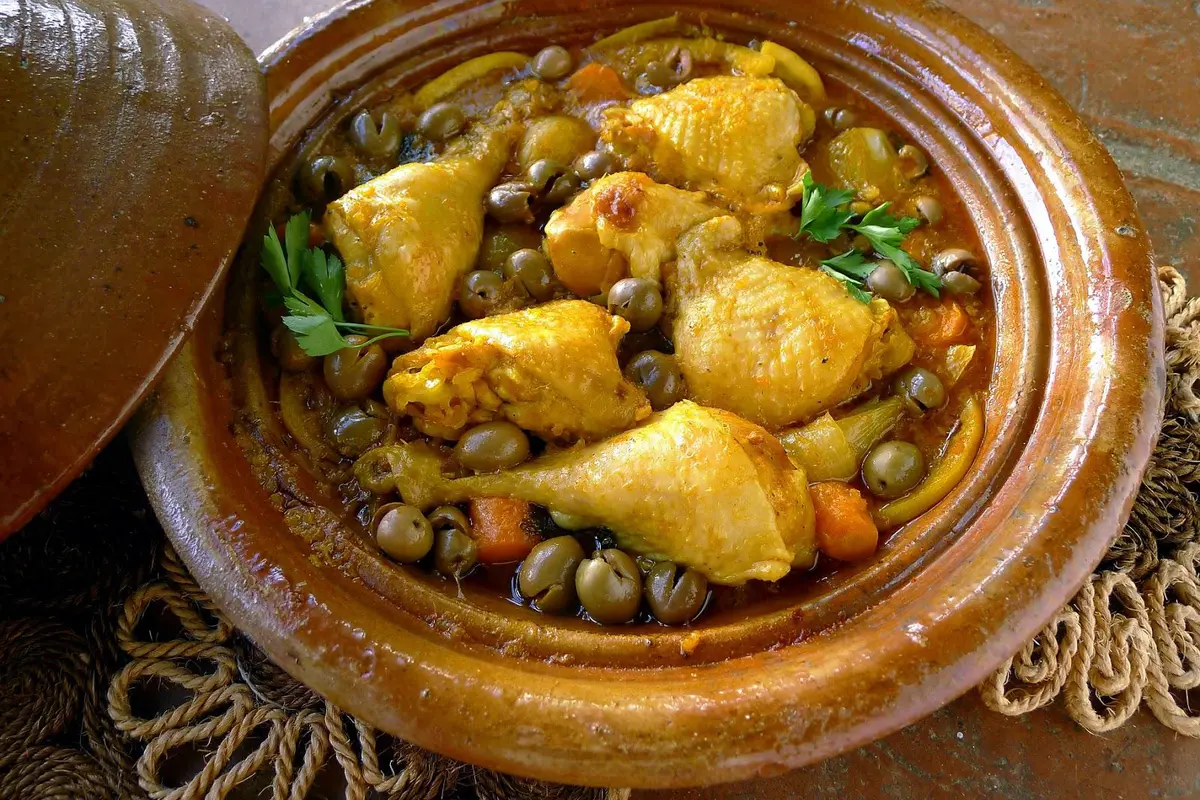
A classic Moroccan chicken tagine recipe with preserved lemon and olives, slow-cooked for tender, deeply flavored meat.
Prep
20 minutes
Cook
1 hour
Servings
4
Difficulty
Medium
Chicken tagine with preserved lemon and olives is arguably the most recognizable Moroccan dish outside Morocco, and for good reason — it balances rich, spiced chicken with the sharp, salty brightness of preserved lemon in a way that’s genuinely distinctive.
The dish relies on patience more than complexity. There’s no long ingredient list or difficult technique here; the result comes from letting the chicken cook slowly enough for the spices and preserved lemon to fully work into the meat, rather than rushing the process at high heat.
This version follows the way it’s commonly taught in Marrakech cooking classes — a straightforward spice base, gentle simmering, and preserved lemon added toward the end so its flavor stays bright rather than cooking away entirely.
In a large tagine or heavy pot, heat the olive oil over medium heat. Add the onions and garlic and cook gently for 5 minutes until softened, not browned.
Stir in the ginger, turmeric, cumin, paprika, saffron (if using), and season with salt and pepper. Cook for 1 minute until fragrant.
Add the chicken pieces to the pot and turn to coat evenly in the spice and onion mixture.
Add the cinnamon stick and pour in the water or stock. Bring to a gentle simmer.
Cover with the tagine lid (or a tight-fitting pot lid) and cook on low heat for 45 minutes, checking occasionally that it isn't drying out.
Add the preserved lemon strips and olives. Cover and cook for a further 10-15 minutes, until the chicken is tender and cooked through.
Taste and adjust seasoning. Scatter with fresh coriander and parsley just before serving.
Serve directly from the tagine with warm Moroccan bread to scoop up the sauce.
Yes. A heavy pot with a tight-fitting lid, such as a Dutch oven, works well. You may need to check moisture levels a bit more often since it won't self-baste in quite the same way.
There isn't a close substitute — preserved lemon has a distinct, salty, fermented flavor that fresh lemon doesn't replicate. If you can't find it, a little extra fresh lemon zest and juice added at the end gets closer than nothing, but the dish will taste noticeably different.
Yes, tagines often taste better the next day once the flavors have settled. Reheat gently on the stove, adding a splash of water if the sauce has thickened too much.
Learn how to prepare traditional Moroccan dishes with a local chef in Marrakech. A hands-on 3-hour class covering tagine, salads and mint tea.
€45
A focused hands-on class on Morocco's signature dish — learn to build, season and slow-cook an authentic tagine from scratch.
€45