How to Make Traditional Moroccan Tagine: The Technique Behind the Dish
Tagine refers to two things at once: the cone-shaped clay (or ceramic) pot, and the slow-cooked dish made inside it. Understanding why the pot is shaped the way it is explains most of what makes the dish work — and where people tend to go wrong trying to recreate it outside Morocco.
Why the Shape Matters
A tagine’s tall, conical lid isn’t decorative. As the dish cooks, steam rises, cools against the sloped lid, and drips back down onto the food rather than escaping. That constant self-basting is what keeps meat tender and vegetables from drying out over a long, gentle cook — without needing much added liquid. A regular pot with a flat lid loses more moisture and needs more attention to stop things catching.
If you don’t own a traditional tagine, a heavy pot with a tight-fitting lid — a Dutch oven works well — gets you most of the way there. You’ll just want to check moisture levels a bit more often.
The Spice Base Comes First
Most tagines start the same way, regardless of what protein or vegetables go in: onions and garlic softened in oil, followed by a spice base that usually includes ginger, turmeric, cumin, and often a pinch of saffron or paprika for color. This base is built before the main ingredients go in, not sprinkled on top later — it’s meant to coat everything as it cooks, not sit as a surface seasoning.
Ras el hanout, a more complex spice blend, appears in some regional variations but isn’t required for a good everyday tagine. If you want a deeper breakdown of what each spice does, our Moroccan spices guide covers that separately.
Layering, Not Stirring
Ingredients typically go into a tagine in layers rather than being stirred together — meat or vegetables on the bottom nearer the heat, with more delicate items like herbs, preserved lemon or olives layered on top so they steam rather than overcook. Once the lid goes on, tagines are largely left alone; frequent stirring lets steam escape and defeats the point of the shape.
Timing Depends on What’s Inside
A vegetable tagine can be done in 30–40 minutes. Chicken usually needs 45 minutes to an hour. Lamb, especially tougher cuts meant to fall apart, benefits from 1.5–2 hours of low, slow heat. Rushing a lamb tagine at high heat gives you tough meat and a broken sauce — patience does more work here than technique.
Common Ingredient Combinations
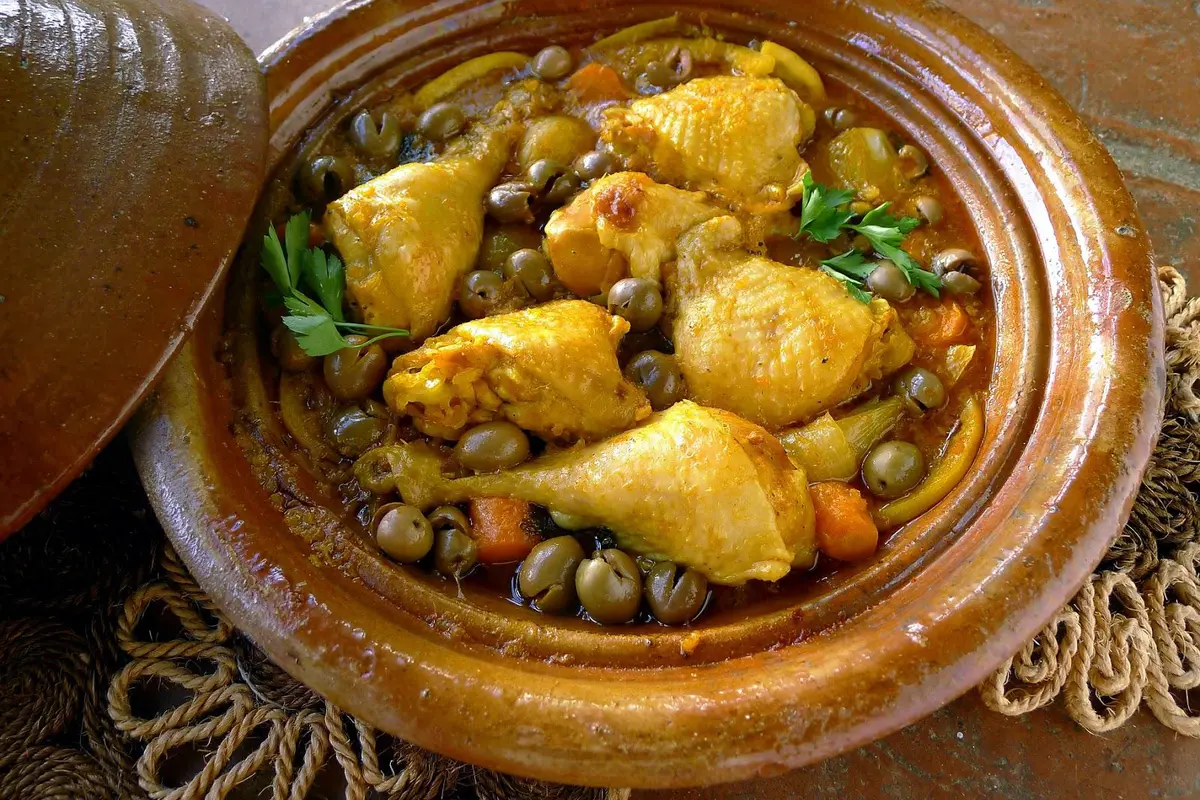
- Chicken with preserved lemon and olives — bright, salty, and the most common version served to tourists for good reason.
- Lamb with prunes and almonds — sweeter, richer, often reserved for special occasions.
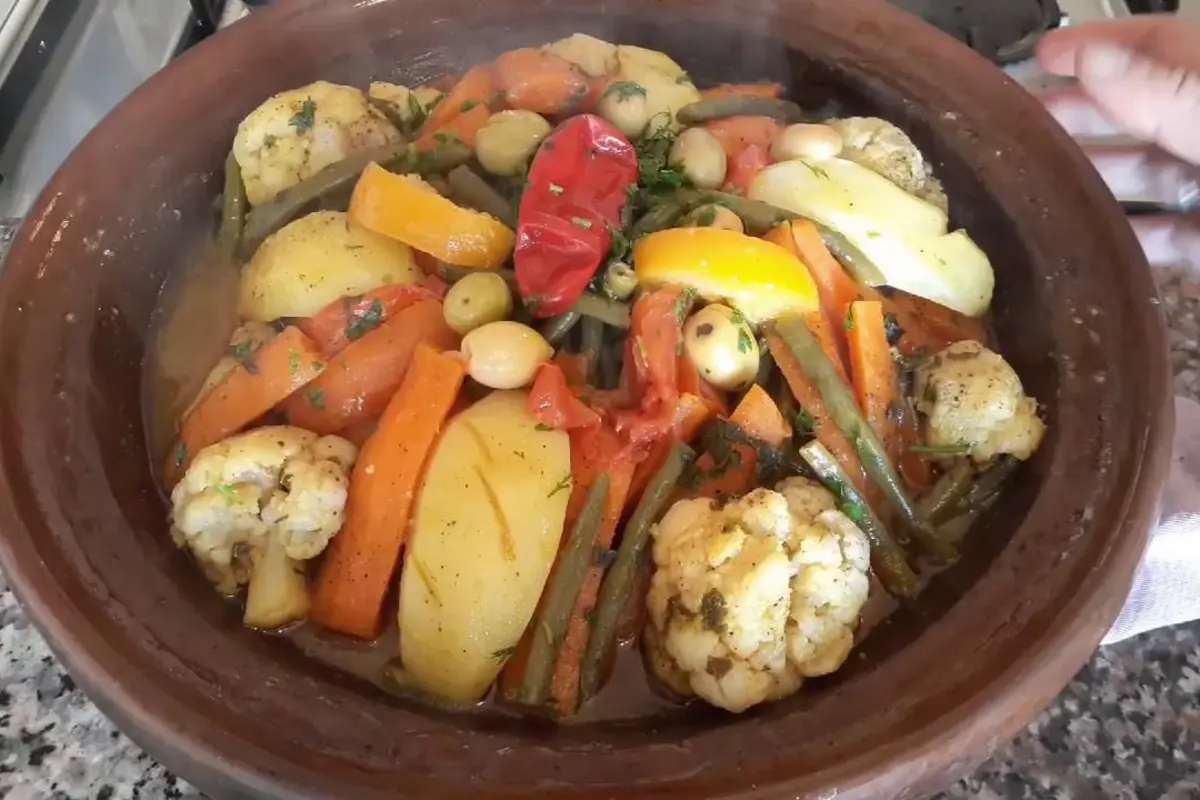
- Vegetable tagine — seasonal produce (carrots, zucchini, chickpeas are common), naturally vegetarian and vegan.
If you’d like the exact ingredient list and step-by-step instructions rather than just the technique, our Moroccan Chicken Tagine recipe and Lamb Tagine with Prunes recipe are written to be followed at home. For hands-on practice with a real tagine pot and a chef correcting your technique as you go, our Tagine Cooking Class in Marrakech runs through this in depth over three hours.