What to Expect From a Moroccan Cooking Class
If you’ve never taken a cooking class before, or you’ve only done a demonstration-style one, it’s fair to wonder what a Moroccan cooking class in Marrakech actually involves day-to-day. Here’s a realistic walk-through, based on how our classes run.
Before You Arrive
You’ll usually get meeting point details the day before or morning of your class, often by WhatsApp — most classes meet at a riad kitchen in the Medina, which can be tricky to find by address alone since Medina streets aren’t always well-marked. Come in clothes you don’t mind smelling like cumin and orange blossom by the end of the day, and bring an appetite; you’ll be eating a full meal, not tasting portions.
Arrival and Introduction
Classes typically start with a short introduction: your chef explains the day’s menu, walks you through the kitchen, and — if the class includes a market visit — this is when you’ll head out to the souk together first. Aprons go on, hands get washed, and you’re usually cooking within the first ten to fifteen minutes. There’s little sitting around.
The Cooking Itself
This is the part that varies most between operators. In a genuinely hands-on class, you’ll be the one chopping vegetables, measuring spices, kneading bread dough, and tending the tagine on the heat — your chef guides and corrects rather than doing it for you. Expect some repetition and waiting (tagines cook slowly, and bread needs time to rise), which your host will usually fill with context about the ingredients, spice blends, or Moroccan food traditions rather than leaving you standing around.
Don’t expect restaurant-plating perfection from your own dishes. That’s normal — the point is learning the technique, not producing something photo-ready on the first try.
The Meal
Every class we run ends the same way: sitting down together to eat everything you cooked. This is often the best part, both because the food is good and because it’s a natural, unforced way to talk with your host and (if it’s a group class) the other travelers. Mint tea usually closes the meal, often poured with some ceremony if your host wants to show off the technique.
After the Class
You’ll typically leave with printed or digital recipe cards for what you cooked, so you can attempt it again at home — though a few things (like the exact spice blend, or a good source for preserved lemons) are harder to replicate outside Morocco. Most classes run 2.5–4 hours depending on format; the Moroccan Cooking Class is a good baseline at three hours if you’re deciding what to book.
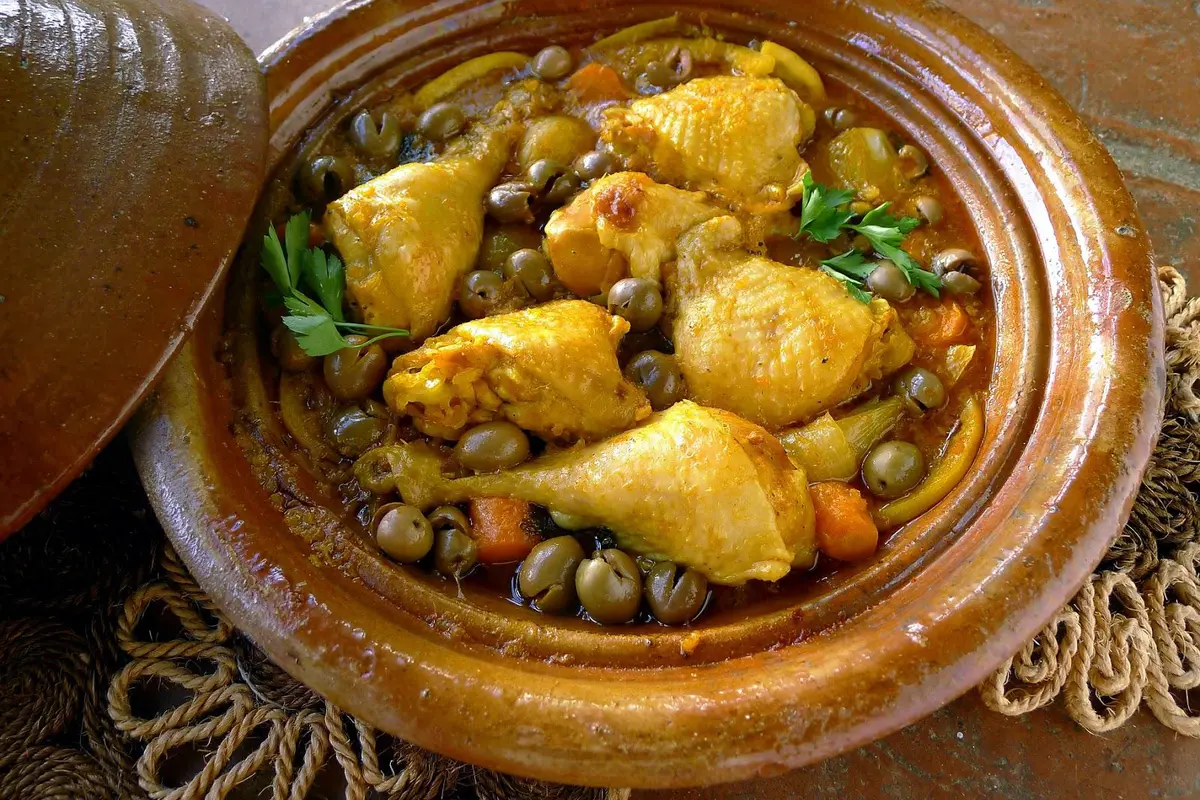
If you’d like to know what you’ll actually be cooking, our Moroccan Chicken Tagine recipe is a close match to what’s taught in most standard classes.